Damp Crawl Space? Let's Talk Drying Options.
You've got a damp crawl space. Maybe it's after a pipe burst, or maybe it's just Charlotte's infamous humidity doing its thing. Whatever the cause, you know you need to dry it out and keep it dry. But what's the best way to do that for the long haul? You've essentially got two main paths: the traditional vented crawl space approach, which often involves just drying and hoping, or a full crawl space encapsulation. I've seen both in action all over Charlotte, from Dilworth to Huntersville, and I'm here to tell you which one usually wins out.
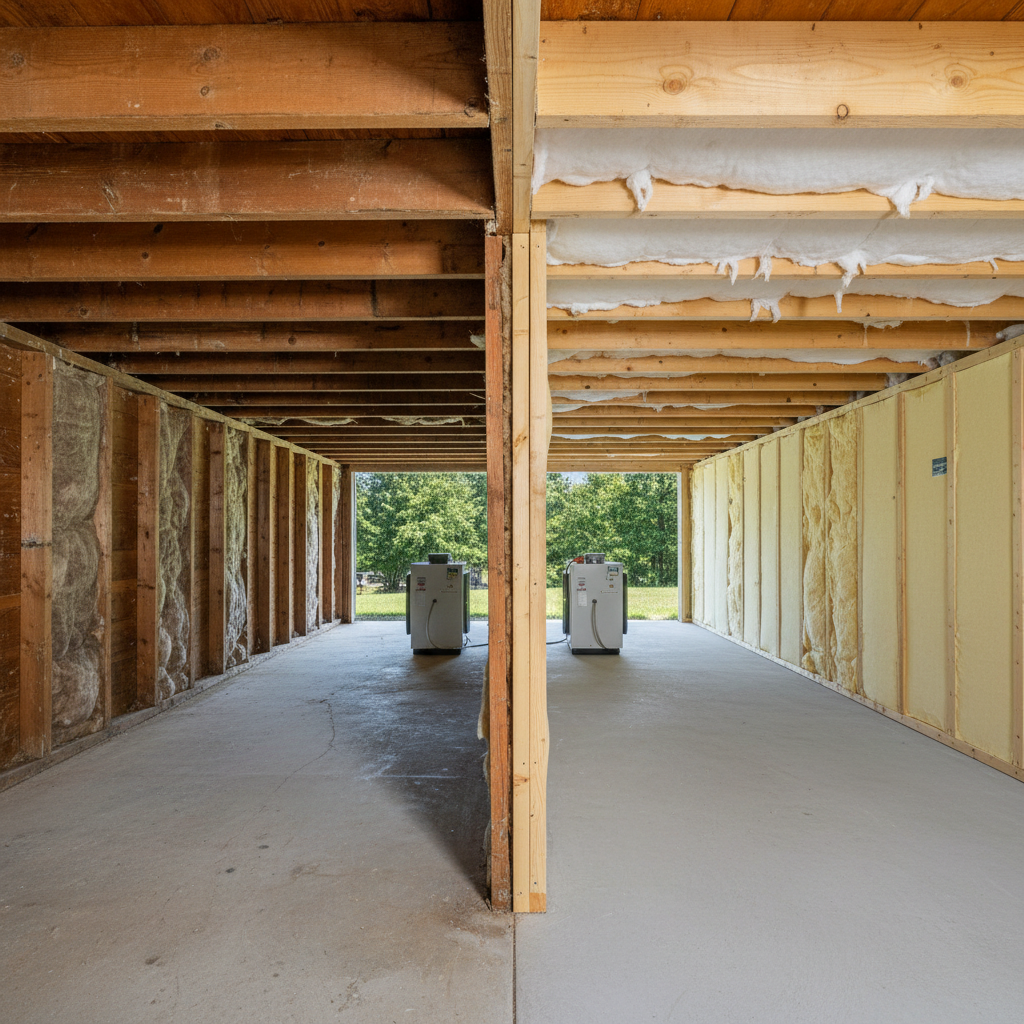
The Traditional Vented Approach: A Band-Aid, Not a Cure
For years, the standard advice was to just vent your crawl space. The idea was that outside air would circulate and dry things out. In theory, it sounds logical, right? You get some fans in there, maybe run a dehumidifier for a bit, and call it a day. We've certainly done our share of water extraction and basic drying in vented crawl spaces after a flood or leak.
Here's the rub, especially here in Charlotte: our climate is a beast. We get hot, humid summers, and even our winters can be damp. When you vent a crawl space, you're essentially inviting all that humid air right in. When that warm, moist air hits the cooler surfaces under your house – like your floor joists, ductwork, or concrete foundation – it condenses. That's a recipe for mold, wood rot, and a whole host of structural problems. It's like trying to dry a wet sponge by waving it around in a fog bank.
Cost: On the surface, the initial cost of just drying out a vented crawl space might seem lower. You're paying for water removal, maybe some temporary dehumidifiers, and drying equipment. No big installation costs.
Durability & Maintenance: This is where it falls apart. It's not durable because it's constantly battling the elements. Maintenance is ongoing – you're always fighting the humidity, checking for mold, and dealing with pests that love damp environments. You might need to run a standalone dehumidifier constantly, which adds to your energy bill.
Appearance: Well, it's a crawl space. It's usually dark, dirty, and not somewhere you want to spend time. And if it's damp, it's probably got that musty smell.
For Horizon Restoration Solutions, we'll certainly dry out a vented crawl space if that's what you need after an emergency. But we'll also have a serious conversation with you about what happens next.
Crawl Space Encapsulation: The Long-Term Solution
Now, let's talk about encapsulation. This is where you seal off your crawl space from the outside world. We put down a heavy-duty vapor barrier on the ground and up the walls, seal all the vents, and often install a dedicated dehumidifier to control the moisture levels. Sometimes we'll also insulate the walls or rim joists.
Think of it as turning your crawl space into a mini-basement – a conditioned, controlled environment. This is the approach I recommend for almost every homeowner in Charlotte, especially if you've had water issues or just want to protect your investment.
Cost: The upfront cost is definitely higher than just drying a vented space. You're paying for materials, installation, and the dehumidifier. It's an investment, no doubt about it.
Durability & Maintenance: This is where encapsulation shines. Once it's done right, it's incredibly durable. The vapor barrier is tough, and the controlled environment means your wood structures aren't constantly exposed to moisture fluctuations. Maintenance is minimal – mainly just changing the filter on your dehumidifier and occasionally checking for any issues. It drastically reduces the chances of mold, wood rot, and pest infestations. Plus, your HVAC system won't have to work as hard, which can save you money on energy bills over time.
Appearance: A properly encapsulated crawl space is clean, dry, and often much brighter. It doesn't smell musty, and you can even use it for storage if you want (though I wouldn't put anything super valuable down there just in case).
My Recommendation for Charlotte Homes
Look, if you're dealing with a damp crawl space here in Charlotte, especially with our red clay soil that holds onto moisture, encapsulation is almost always the smarter long-term play. The initial cost might sting a bit, but when you factor in the reduced risk of structural damage, mold remediation, pest problems, and lower energy bills, it pays for itself over time. It's a proactive solution that protects your home's foundation and indoor air quality.
A traditional vented crawl space, even after drying, is just going to keep fighting our humid climate. It's a battle you're likely to lose, and it'll cost you more in the long run with recurring issues. If you want a dry, healthy, and stable home environment, especially after a water event, encapsulation is the way to go. Give us a call at Horizon Restoration Solutions if you want to talk specifics about your home.